A long-abandoned historic building in central Cluj-Napoca is nearing the end of a major transformation. Pavilion B of the former military garrison on Bulevardul 21 Decembrie 1989 is set to reopen as a modern cultural centre, following a multi-year restoration project carried out under strict heritage protection rules.
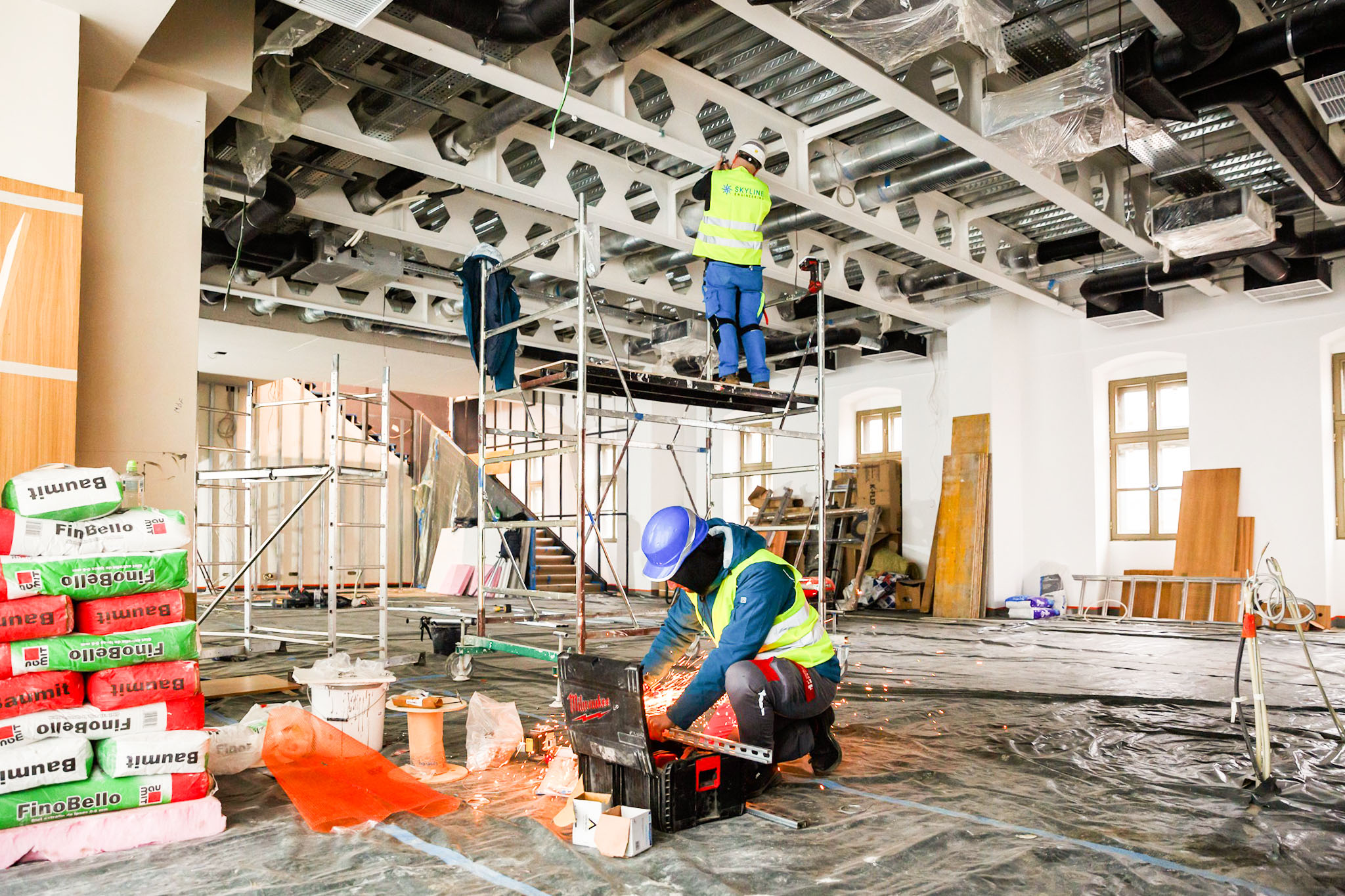
With over 2,000 square meters of usable space, the newly restored building will host exhibitions, cultural events, workshops, and community activities. Interior works are now in their final stages and include the installation of ventilation systems, suspended ceilings, flooring, glass partitions, metal doors, and custom furniture. A new steel structure has also been installed for the main staircase, adapting the historic interior to contemporary use without altering its architectural character.
City officials describe the project as a strategic investment in Cluj’s cultural infrastructure, aimed at expanding the city’s capacity to host independent cultural initiatives and public events. The building is expected to become operational later in 2026, following final inspections and handover.
A Difficult but Carefully Managed Restoration
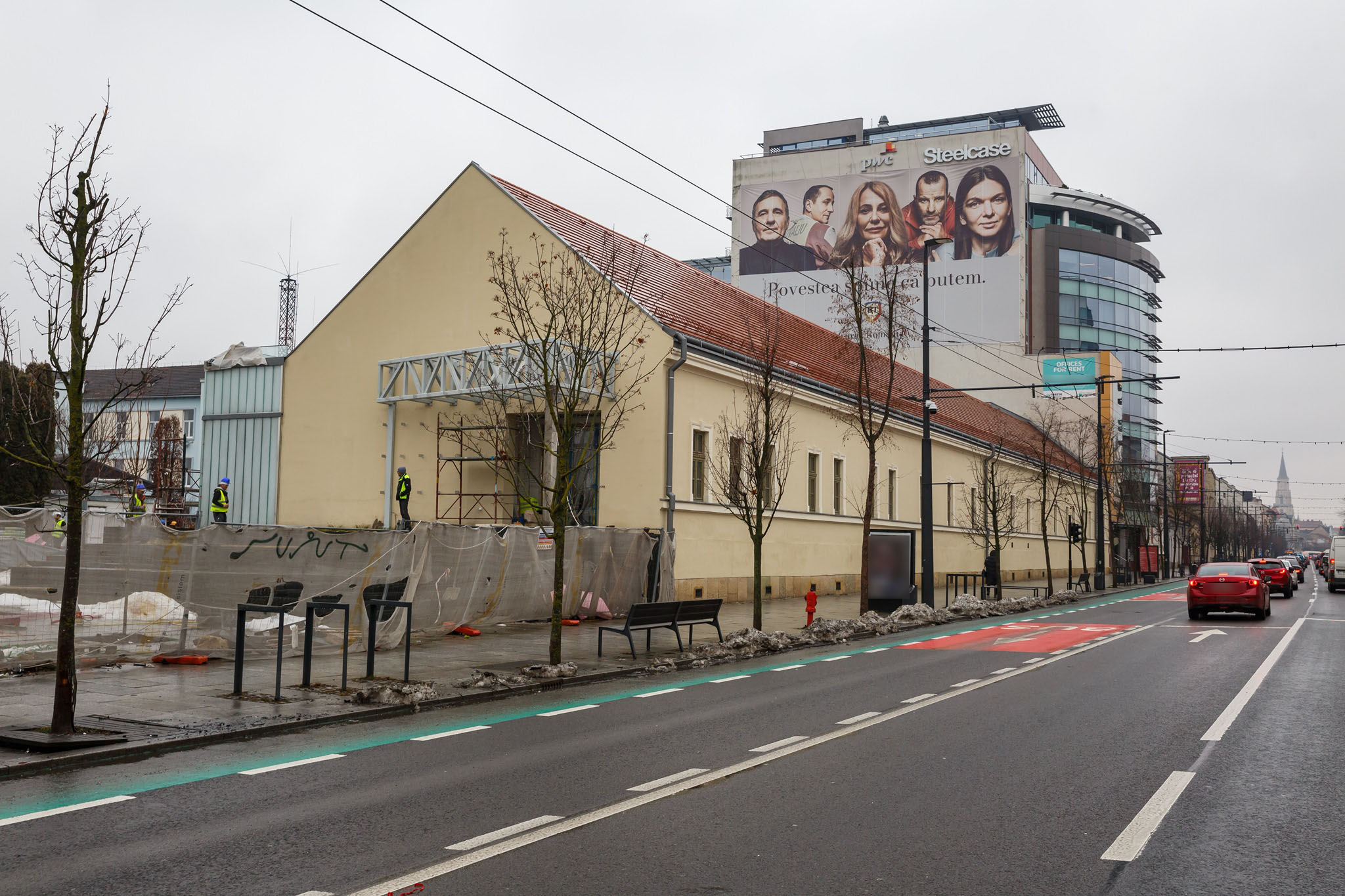
The rehabilitation of Pavilion B has been a technically complex process. Classified as a historic monument, the building required gradual intervention, beginning with structural consolidation and the restoration of original architectural elements. No structural demolition was permitted, and all works were carried out in compliance with national heritage regulations.
The project also included the demolition of Pavilion A, an adjacent structure deemed structurally unsafe and beyond repair. Pavilion B, by contrast, was preserved and adapted, with its attic converted into functional space and modern building systems discreetly integrated into the historic shell.
Construction works officially began in 2023 after years of planning delays and procurement procedures. The total investment is estimated at approximately €6 million, funded primarily from the local budget.
From Military Barracks to Cultural Space
Pavilion B dates back to the 19th century and was originally part of Cluj’s central military garrison, later known as the “Avram Iancu” barracks. For decades, the complex served military purposes before being transferred from the Romanian Army to the City of Cluj-Napoca in 2009.
After the transfer, the site entered a prolonged period of uncertainty. Various cultural projects were proposed over the years, including plans for a new Philharmonic concert hall and an ambitious European Center for Contemporary Art. None of these initiatives materialised, largely due to funding issues and heritage constraints.
As the years passed, the buildings deteriorated significantly. Pavilion A became structurally unstable and posed a public safety risk, while Pavilion B remained unused and increasingly degraded. Temporary solutions, including a public parking lot on the adjacent land, became long-term stand-ins for the cultural redevelopment initially promised.


A Long-Awaited Cultural Return
The reopening of Pavilion B marks the first tangible result of nearly two decades of discussions about the future of the former garrison site. While larger projects, such as a new concert hall for the Transilvania Philharmonic, remain unresolved, the completion of Pavilion B restores an important historic building to public use.
Once opened, the centre will operate as a flexible cultural venue rather than a single-purpose institution, allowing it to host a wide range of events and initiatives. City officials and cultural organisations see this as a step toward rebuilding trust after years of stalled plans and missed deadlines.


Looking Ahead
For now, Pavilion B stands as a rare example of a large-scale heritage restoration in Cluj-Napoca that has actually reached completion. Its transformation from a decaying military barracks into a public cultural space closes a long chapter of uncertainty and reopens a historic building to the city it has overlooked for more than a century.
Whether it becomes a lasting cultural anchor or another transitional solution will depend on how the space is programmed and supported in the years to come, but for the first time in a long while, the former garrison is no longer just a reminder of unfulfilled promises.