Cluj-Napoca’s Local Council has approved a new project intended to purchase and equip at least 50 social homes for vulnerable families currently living in Pata Rât.
The project, called LOCUS, short for Locuire, Oportunități și Coeziune Urbană Sustenabilă, has a total eligible value of almost 30 million lei. It was approved by the council on 28 July, with the municipality contributing approximately 592,000 lei, or 2% of the eligible cost. The remaining funding is expected to come through the North-West Regional Programme. The council decision approves the project for financing, rather than confirming that the full funding contract has already been secured.
Around 140 people are expected to benefit. The homes would remain in public ownership and be rented as social housing, with the project scheduled for completion by the end of 2029. The properties must continue to serve a social-housing purpose for at least ten years.
The plan is notable not only because it would provide permanent homes, but because those homes are intended to be distributed through Cluj-Napoca and its metropolitan area, rather than concentrated in another building or isolated settlement.
For Pata Rât residents, however, the word “relocation” carries a difficult history.
More than a housing shortage
Pata Rât is frequently described simply as an impoverished Roma settlement beside Cluj’s landfill. That description is incomplete.
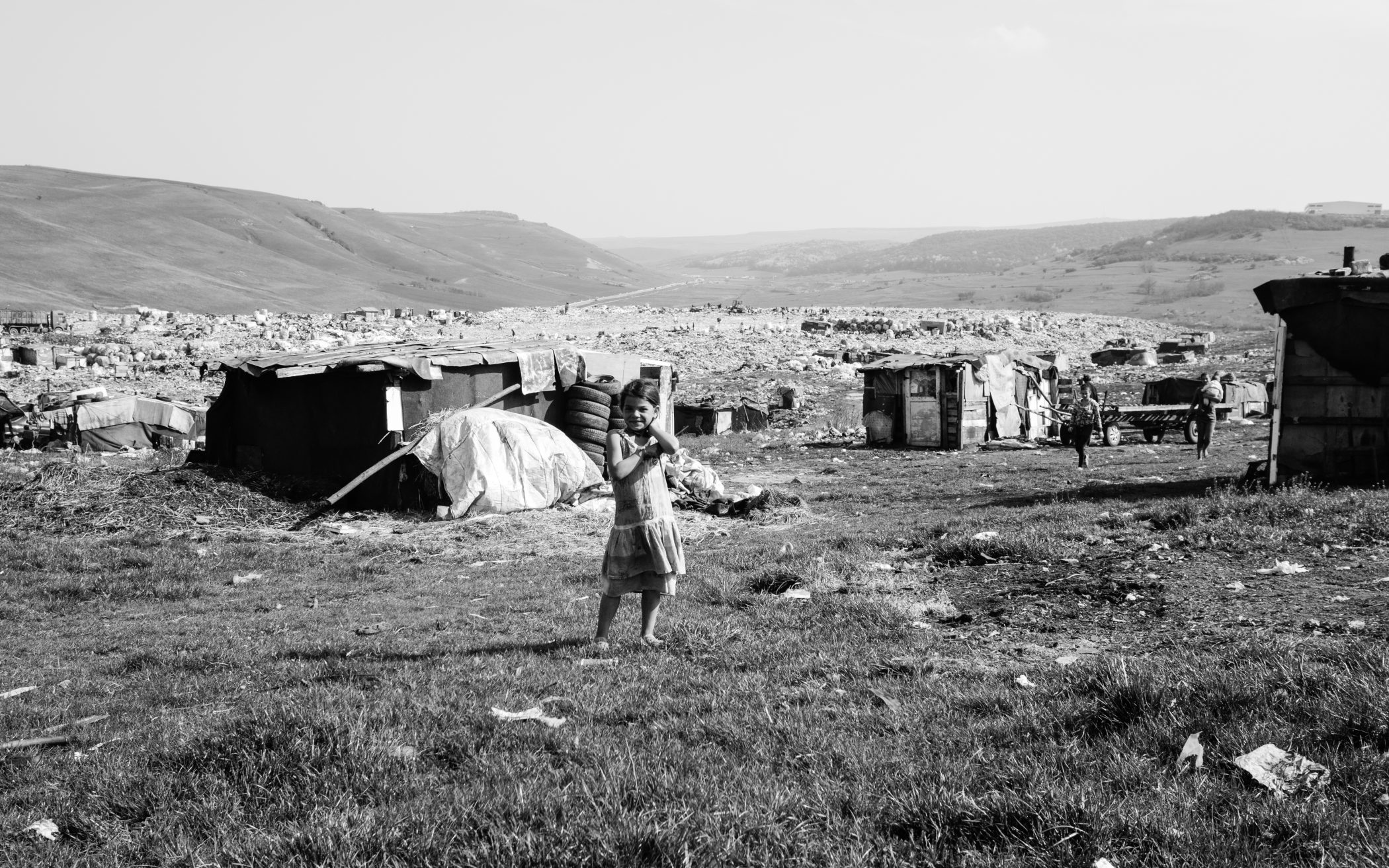
The name covers several communities with different histories, including Dallas, Cantonului, the settlement associated with the landfill and the modular housing area sometimes known as Colina Verde. Some families moved to the area in connection with work recovering recyclable materials. Others were directed or displaced there following evictions from elsewhere in Cluj-Napoca.
A local study commissioned by the European Union Agency for Fundamental Rights documented families being moved towards Cantonului Street from locations including Avram Iancu Street, Calea Turzii, Albac, Kővári, Byron and civil-protection shelters during the 2000s.
Municipal institutions were not absent from this process.
Administrative records examined in the study included a 2003 construction authorisation for homes “with a social character”, partnerships between City Hall and the Ecce Homo organisation to install lightweight houses, and a 2005 council decision bringing donated homes at Cantonului into the municipality’s housing system. Self-built shelters were sometimes tolerated as temporary accommodation while residents waited for proper housing.
What was presented as temporary gradually became permanent.
Pata Rât therefore cannot be understood only as an informal settlement created through individual decisions. Public policies, evictions and the failure to provide alternative housing contributed to the concentration of vulnerable families in the area.
The road from Coastei Street to Pata Rât
The most widely documented relocation occurred on 17 December 2010, when Roma families were removed from Coastei Street, close to the centre of Cluj-Napoca, and taken to modular accommodation at Pata Rât.
The operation was not planned overnight.
On 30 March 2010, the Local Council approved steps to identify land in the Pata Rât area for purchase or exchange. The official decision referred to people living without legal authorisation on Cantonului and Coastei streets and to complaints submitted by other residents.
Further council decisions followed during the summer.
The municipality exchanged small parcels of comparatively valuable land on Nădășel Street for a larger site at Pata Rât. The first exchange involved 300 square metres on Nădășel Street for 3,000 square metres at Pata Rât. A second exchange added another 2,755 square metres.
By July 2010, municipal representatives were publicly discussing new homes for families living on both Cantonului and Coastei streets. Contemporary reporting cited estimates of around 170 families in need of normal housing across the two areas.
The administrative sequence shows that Pata Rât had been selected as a destination months before the families on Coastei Street were told to leave.
Evicted in December
Contemporary human-rights organisations recorded different totals for the households affected by the Coastei eviction, depending on whether they counted registered tenants, informal households, extended families or individuals.
The European Roma Rights Centre documented 56 families, representing approximately 270 people, including at least 106 children. Amnesty International referred to 76 families, of whom 40 were offered rooms in the new modular development.
Although the figures differ, the central facts are consistent.
Residents received very limited notice. According to testimony gathered after the eviction, they were instructed on 15 December to submit applications for emergency housing and were told late the following day to prepare to leave. Police, gendarmes, municipal workers, trucks and demolition equipment arrived early on 17 December.
The eviction took place during winter, with temperatures reported at around minus 10 degrees Celsius. Homes were demolished and families were transported to Pata Rât. Some received rooms in the modular buildings, while others had to share accommodation with relatives or were left without an independent housing offer.
The modular rooms were small, generally around 15 to 18 square metres. Four rooms shared a bathroom, and some units initially lacked adequate heating and hot water. Human-rights observers reported large families living in single rooms, sometimes together with another household.
The move also placed residents farther from schools, employment, healthcare, shops and public transport.
Residents later described Coastei Street as a place where many families had jobs, children attended school and essential services were within reach. Their objection was not simply that the new rooms were small. They believed the relocation had separated them from the city and damaged an existing process of social inclusion.
City Hall said the move was not based on ethnicity
During a subsequent investigation by the National Council for Combating Discrimination, Cluj City Hall argued that the relocation was based on the residents’ housing status, not their Roma ethnicity.
Municipal representatives said the Coastei homes were occupied without valid legal rights, that leases had expired or had not been renewed, and that no suitable alternative municipal land had been available elsewhere.
City Hall described the modular units as emergency housing and said allocation decisions considered factors including legal housing status, identity documents registered in Cluj, household size and whether families had children.
The anti-discrimination council did not accept that explanation as sufficient justification for the location and conditions of the relocation.
Its investigators visited Pata Rât and documented defective walls and roofs, dampness, leaking pipes, inadequate toilets and cases in which two families, or as many as ten to twelve people, occupied one room.
They also confirmed that the modular development was isolated from public transport, schools, hospitals and shops, and that residents had enjoyed substantially better access to services while living on Coastei Street.
In Decision 441/2011, the council concluded that the eviction, relocation and isolation of the community beside the landfill and industrial waste facilities amounted to discriminatory treatment.
It found that Roma ethnicity had been a basis for the different treatment, that the location was not objectively justified and that the move restricted residents’ access to education and employment. It issued fines, a warning and a recommendation that the municipality ensure minimum living standards.
The finding was subsequently upheld after the municipality challenged it in court.
Residents continued asking to return to the city
The relocation did not disappear from local politics after 2010.
At a Local Council meeting in November 2016, residents and activists again raised the conditions at Pata Rât. Enikő Vincze questioned the conversion of land in an industrial area for residential use and the decision to construct modular homes there.
Claudia Zsigo, speaking for the former Coastei community, asked the municipality to provide families with other homes inside Cluj-Napoca.
Councillor Radu Moisin defended the 2010 decision, describing the modules as an alternative provided to people who had occupied the Coastei site without legal authorisation.
The exchange illustrated the central disagreement that has continued for years.
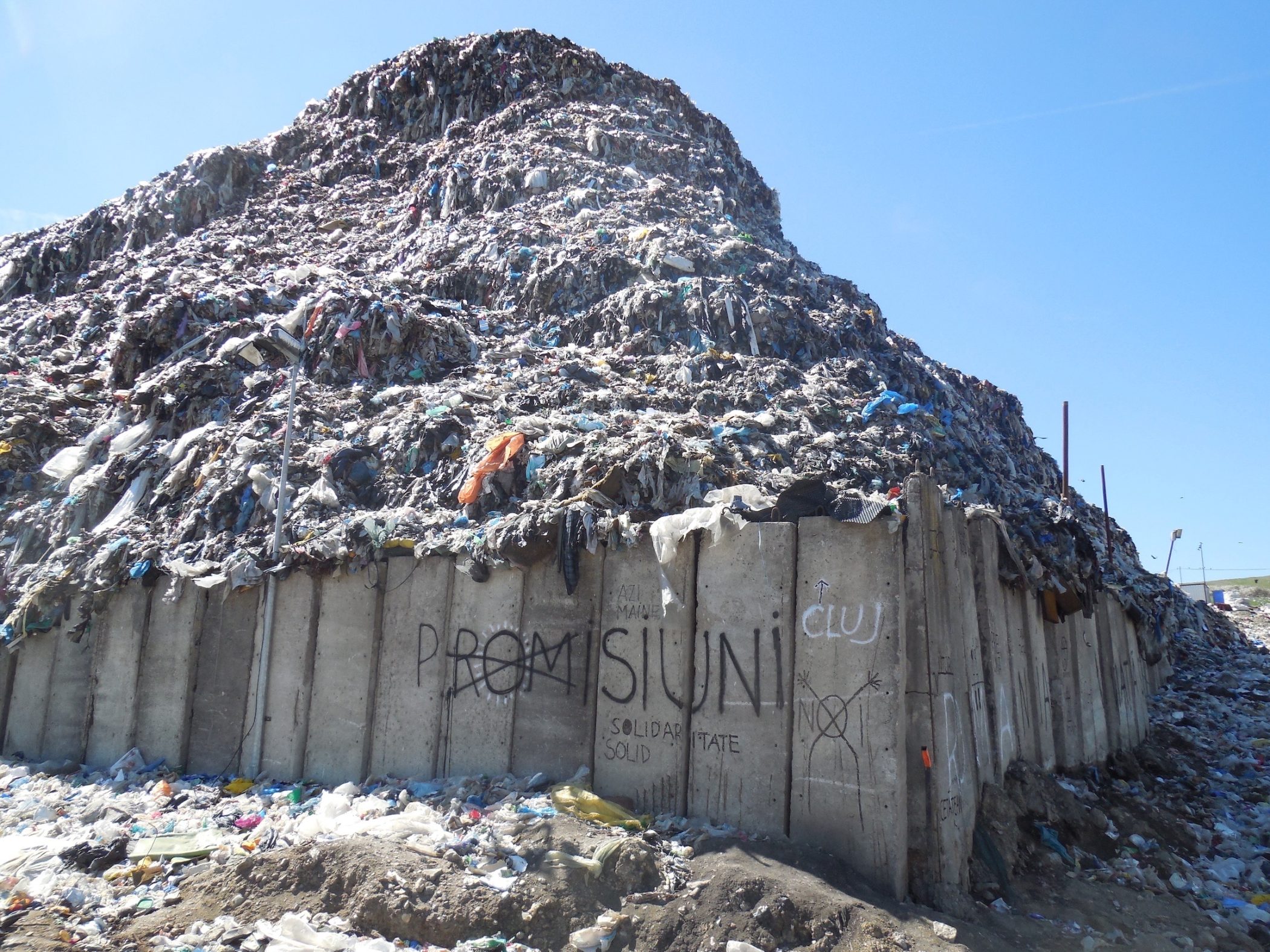
Municipal representatives often presented the modules as an improvement over informal or legally insecure housing. Residents argued that moving families to an isolated area beside the landfill could not be considered an adequate social-housing solution, particularly when they had previously lived close to schools, employment and public services.
Moving families out of Pata Rât
Later projects adopted a different model, based on moving families out of Pata Rât and into ordinary apartments.
The Pata Cluj project, implemented between 2014 and 2017 with external funding, acquired homes for 35 families. It was one of the first significant attempts to address segregation through housing rather than through improvements within the settlement.
An independent evaluation described the housing component as the project’s most important achievement, but also identified limitations. Only around one third of the families received homes inside Cluj-Napoca. Approximately two thirds were moved to surrounding localities such as Apahida, Florești and Baciu.
The 35 households represented only a small proportion of the total Pata Rât population, and the evaluation found that post-relocation support and long-term institutional responsibility remained insufficient.
Further programmes followed.
Official documentation published in 2026 states that the Pata 2 project purchased and allocated 74 apartments to 74 families. Combined with 34 families supported through the earlier Pata project, this represented 108 families moved into ordinary housing.
Smaller initiatives have also included housing for elderly residents and the Cluj4Home project.
The same official document warns that receiving an apartment does not automatically resolve every problem created by long-term poverty and segregation. Families may continue to need support with employment, education, healthcare, documents, utility costs, relations with landlords or neighbours and adapting to new surroundings.
Without sustained support, some difficulties can continue or even become more severe after a move.
Apartments will remain publicly owned
During the Local Council debate, Mayor Emil Boc emphasised that the properties purchased through LOCUS would not be transferred into the ownership of beneficiaries.
The selected families would become tenants, while the apartments would remain part of the public housing stock.
The clarification appeared to respond to anticipated criticism that families from Pata Rât would be given apartments free of charge. In practice, the project would expand the municipality’s social-housing portfolio rather than transfer public assets to private individuals.
USR councillor Mihaela Nia supported the project but asked for beneficiaries to be monitored and for consequences where agreed obligations are not respected. PSD councillor Radu Lupaș also sought assurances that the apartments could not later be sold.
The precise obligations, possible sanctions and appeal procedures have not yet been publicly detailed. This distinction will be important because project documentation also uses the term “monitoring” to describe social support following relocation, including case management and assistance with integration.
In an earlier council discussion, Boc said informal shelters should be demolished after their occupants move, in order to prevent the sites from being occupied again. Any such process will require safeguards to ensure that every resident of a structure has received appropriate alternative accommodation before demolition takes place.
Boc also praised Pata Rât residents for cooperating with the authorities, helping to prevent new informal construction and identifying illegal waste dumping allegedly carried out by outsiders. Residents reportedly asked officials not to assume that every clandestine rubbish deposit in the area had been created by the local communities.
Conflicting estimates of the population
There is no clear and consistently reported public figure for the number of people currently living at Pata Rât.
One official metropolitan document from January 2026 estimated the population at approximately 1,200 people across four communities and said that more than 550 people had moved through previous housing programmes.
In June, officials cited by Radio Cluj said more than 2,500 people remained in the area, while also reporting that around 110 apartments had been acquired and more than 500 people relocated.
The large difference may reflect different boundaries, counting methods or outdated local records. It nevertheless raises an important issue for LOCUS: the municipality and metropolitan association need a transparent and verifiable baseline against which progress can be measured.
What LOCUS promises
Under LOCUS, the municipality and the Cluj Metropolitan Area Intercommunity Development Association plan to identify, evaluate and purchase at least 50 properties.
The homes are expected to be assessed by authorised valuers, matched to household needs and allocated under a beneficiary-selection methodology. Leases would then be signed with the selected families.
The project includes more than the purchase of apartments.
Official documents describe case management before, during and after each move. Services are expected to include psychological, social and legal counselling, assistance obtaining identity documents, educational mediation, support accessing employment, help during crises and continued monitoring following relocation.
This support is necessary. Families leaving Pata Rât may be moving away from relatives, informal employment, childcare arrangements and community networks developed over many years. Some may also encounter discrimination from neighbours, schools, landlords or employers.
A successful relocation cannot be measured only by handing over a key. It must also be measured by whether families retain their homes, whether children remain in school, whether adults can reach employment and healthcare, and whether residents feel safe and accepted in their new neighbourhoods.
Questions that remain unanswered
The history of Pata Rât makes the implementation details of LOCUS especially important.
It is not yet clear how many of the 50 homes will be purchased within Cluj-Napoca itself and how many will be located in surrounding communes. Previous programmes moved a majority of beneficiaries outside the municipality, partly because apartments were more affordable there.
Authorities should also clarify whether families will be able to reject a proposed home or locality without losing access to the programme. A property may technically meet housing standards while being unsuitable for a family whose children attend school or whose members work on the opposite side of the metropolitan area.
The beneficiary-selection system will require similar transparency. Residents and community representatives should be able to understand who qualifies, how vulnerability is assessed and how decisions can be challenged.
Rent and utility affordability will also matter. A family may be able to pay social rent but struggle with heating, electricity or transport costs in an ordinary apartment. Clear procedures will be needed to prevent temporary financial difficulties from leading to another eviction.
Finally, the promised post-relocation assistance must continue for long enough to provide meaningful stability. Short-term case management tied only to the duration of European funding would risk repeating one of the weaknesses identified in earlier projects.
A response to a history, not an act of charity
LOCUS could become one of Cluj’s most substantial social-housing and desegregation projects.
It should not, however, be presented as though the city is simply rescuing families from conditions entirely of their own making.
Pata Rât was shaped by poverty, discrimination and informal work around the landfill, but also by evictions and administrative decisions that pushed vulnerable, predominantly Roma families towards the edge of the city. Temporary accommodation became long-term segregation, while limited social-housing supply and restrictive eligibility rules made it difficult for many residents to leave.
Roma residents and civil-society organisations have spent years documenting the conditions, challenging discriminatory policies and demanding access to ordinary housing.
The 50 homes proposed through LOCUS cannot undo that history. They could, however, represent another step away from a policy of containing poverty at the edge of Cluj and towards recognising housing as the foundation for education, employment, health and participation in the life of the city.
Whether that happens will depend on where the homes are purchased, how families are selected, how much choice residents are given and whether support continues after the moving vans have left.