As criticism of the festival grows, legitimate concerns about noise, public space and disruption should be addressed. But Cluj should not lose sight of what UNTOLD has become: a major tourism engine, an international cultural landmark and one of the city’s most successful global exports.
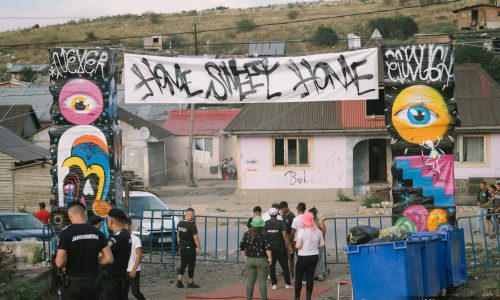
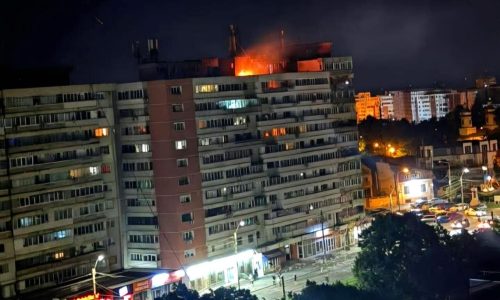
A newly released documentary, UNTOLD: Costul nevăzut, has reopened a familiar debate in Cluj-Napoca. It gives a voice to residents who feel that the festival’s impact on their neighbourhoods, public spaces and daily lives has been ignored or minimised.
Those residents deserve to be heard. UNTOLD is loud, enormous and disruptive. It occupies a central part of the city, changes traffic routes, restricts access to parts of the park and continues deep into the night.
But any serious discussion about the festival must consider more than its disadvantages.
UNTOLD is not simply a private party that Cluj tolerates for four days. It is one of the most internationally recognised events ever created in Romania, bringing hundreds of thousands of festival entries, visitors from around the world and substantial economic activity into Cluj and the surrounding region.
The question should not be whether UNTOLD is good or bad. It should be how Cluj can protect the festival’s enormous value while reducing the burden placed on residents.
One of Cluj’s greatest international successes
In the 2026 edition of DJ Mag’s Top 100 Festivals poll, UNTOLD was ranked the third-best festival in the world, behind only Tomorrowland and EDC Las Vegas. It maintained the same position for another year, remaining ahead of globally famous events including Ultra Music Festival, Creamfields, Glastonbury and Coachella. (DJ Mag)
That recognition has value far beyond the festival gates.
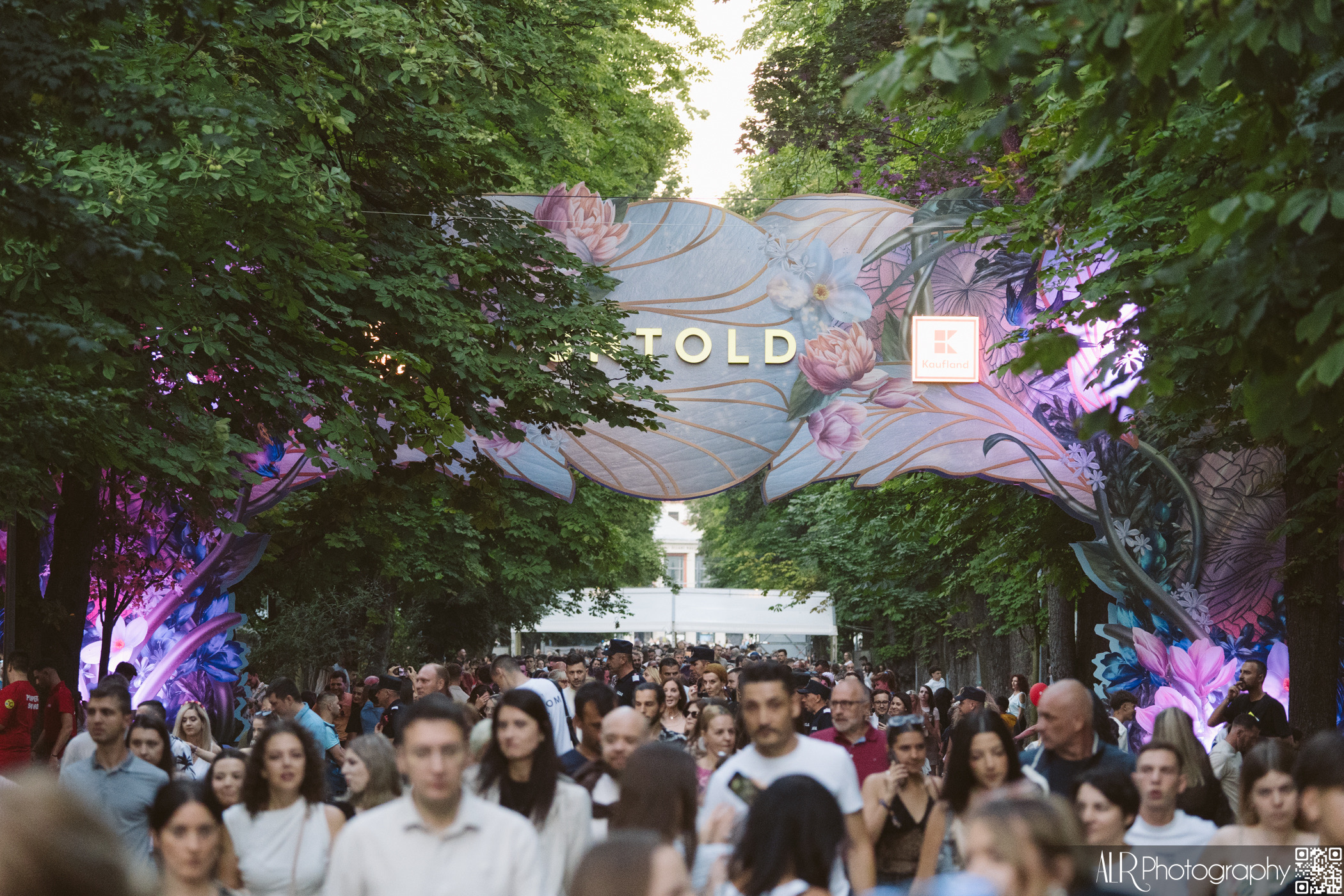
Every international article, artist announcement, social media video and aerial photograph of a packed Cluj Arena places the name of Cluj-Napoca in front of a global audience. DJ Mag’s description of UNTOLD even argues that the city itself is the festival’s “real headliner”, with visitors encouraged to experience Transylvanian food, culture and hospitality alongside the music.
Few conventional tourism campaigns could purchase that degree of repeated international exposure.
For UNTOLD ONE, taking place from 6 to 9 August 2026, more than 110,000 festivalgoers from approximately 150 countries are expected on each day of the event. The programme includes internationally recognised artists such as Sting, Lewis Capaldi, Zara Larsson, Martin Garrix, Kygo, Marshmello and Flo Rida.
For several days, Cluj becomes one of the most visible entertainment destinations in Europe.
Visitors spend money throughout the city
The economic benefit does not remain entirely inside Cluj Arena.
Festivalgoers need hotels, apartments, meals, taxis, public transport, coffee, groceries, clothing and other services. They employ local photographers, videographers, technicians, production workers, security staff, drivers, caterers and temporary workers. Businesses that might otherwise experience a quieter period during the summer receive several days of exceptionally concentrated demand.
Following UNTOLD X in 2025, organisers reported a regional economic impact exceeding €120 million. The anniversary edition recorded more than 470,000 cumulative attendances across four days, welcomed visitors from more than 150 countries and saw international participation increase by 25 percent compared with the previous edition.
The €120 million figure is an estimate produced by the festival and its partners, rather than an independently audited calculation. It should therefore be reported with that qualification.
However, the underlying economic effect is not imaginary.
A 2024 study by researchers Alexandra Barbu and Luminița Nicolescu examined the relationship between UNTOLD attendance and Cluj’s hospitality sector. It found that the festival produces a significant increase in hotel occupancy and overnight stays, supporting the conclusion that it acts as an economic booster for the city.
Anyone attempting to book accommodation during UNTOLD can see the effect directly. Rooms become scarce, prices rise and properties across Cluj and the metropolitan area attract customers who might never otherwise have visited the region.
Some visitors also stay longer, visit local attractions or return to Transylvania after first discovering Cluj through the festival. The full promotional benefit cannot be measured only through transactions completed during four nights in August.
UNTOLD has helped change perceptions of Romania
UNTOLD has also demonstrated that a Romanian city can produce a large international event at a level comparable with established festival destinations in Belgium, the Netherlands, the United Kingdom and the United States.
International music publication Mixmag has described UNTOLD as an event that changed the game in Romania and created new opportunities for both Cluj and the wider country. The festival attracts more than 400,000 cumulative visits annually and has become one of Romania’s most culturally significant modern events.
This matters.
Romania is too often presented internationally through political instability, poor infrastructure or outdated stereotypes. UNTOLD presents another image: a young, creative and capable country that can build sophisticated productions, attract major artists and safely welcome an enormous international audience.
That reputation supports more than tourism. It contributes to Cluj’s wider identity as a youthful, outward-looking city in which international businesses, students, artists and professionals may wish to live and work.
The complaints cannot simply be dismissed
Supporting UNTOLD does not require pretending that the festival is perfect.
The official disruption extends considerably beyond the four festival days. For the 2026 edition, restrictions affecting the Cluj Arena area, the pedestrian plateau and parts of the northern side of Central Park run from 31 July until 17 August. A larger perimeter, including sections of the park and surrounding streets, is closed to pedestrians between 4 and 12 August.
Residents are therefore justified in saying that the impact lasts longer than a single weekend.
Noise is an even more serious issue, particularly because the festival is held near homes and medical facilities.
During the 2024 edition, the Cluj Public Health Directorate carried out nighttime measurements at residential locations and near the Emergency Clinical Hospital for Children. It reported that limits applicable to protected areas were exceeded by an average of 20 dB(A), fined the organiser 5,000 lei and requested technical changes to the intensity and direction of the sound.
At the same time, measurements by the Environmental Protection Agency were below the separate 90 dB limit applied to outdoor cultural and entertainment events. The difference shows why the debate can become confusing: sound levels may comply with one standard at the festival perimeter while still creating excessive disturbance in residential or medically protected areas.
These concerns should not be treated as hostility towards music, young people or tourism. People living beside the festival may receive little direct financial benefit while experiencing sleepless nights, restricted access and considerable disruption.
Their inconvenience is real, even if the festival’s wider benefits are greater.
The best response would be neither unconditional support nor demands to remove the festival from Cluj.
The city and organisers should publish clearer information about the areas occupied, fees paid, public resources used and money invested in restoration and infrastructure. The economic-impact methodology should also be made public, allowing the €120 million claim to be examined independently rather than repeatedly accepted or dismissed according to political preference.
More could be done to protect hospitals and residential streets through sound-direction technology, stricter monitoring, lower limits for stages closest to protected areas and publicly accessible noise measurements.
The construction and dismantling period should be shortened wherever technically possible, while closed areas should reopen in stages rather than remaining inaccessible until every part of the site has been removed.
UNTOLD could also offer more visible benefits directly to the local community, including support for neighbourhood projects, cultural programmes, park restoration and assistance for institutions most affected by the event.
These measures would strengthen the festival rather than weaken it.
UNTOLD has placed Cluj on a global cultural map, filled local businesses, brought international visitors to Transylvania and helped prove that Romania can create entertainment events of the highest international standard.
That does not give the organisers permission to ignore noise, public access or transparency. Success creates greater responsibilities, particularly when a private event uses some of the city’s most important public spaces.
But the debate should remain proportionate.
Cluj would lose something economically, culturally and internationally significant if UNTOLD disappeared. The festival is not an inconvenience with a few incidental benefits. It is an important asset whose disadvantages must be better managed.
The right conclusion is not that Cluj should turn against UNTOLD.
It is that a world-class festival should also meet world-class standards in the way it treats its host city.