The long awaiting approval for the metropolitan belt, aimed at reducing traffic which needs to pass through the city, has finally been received from the government.
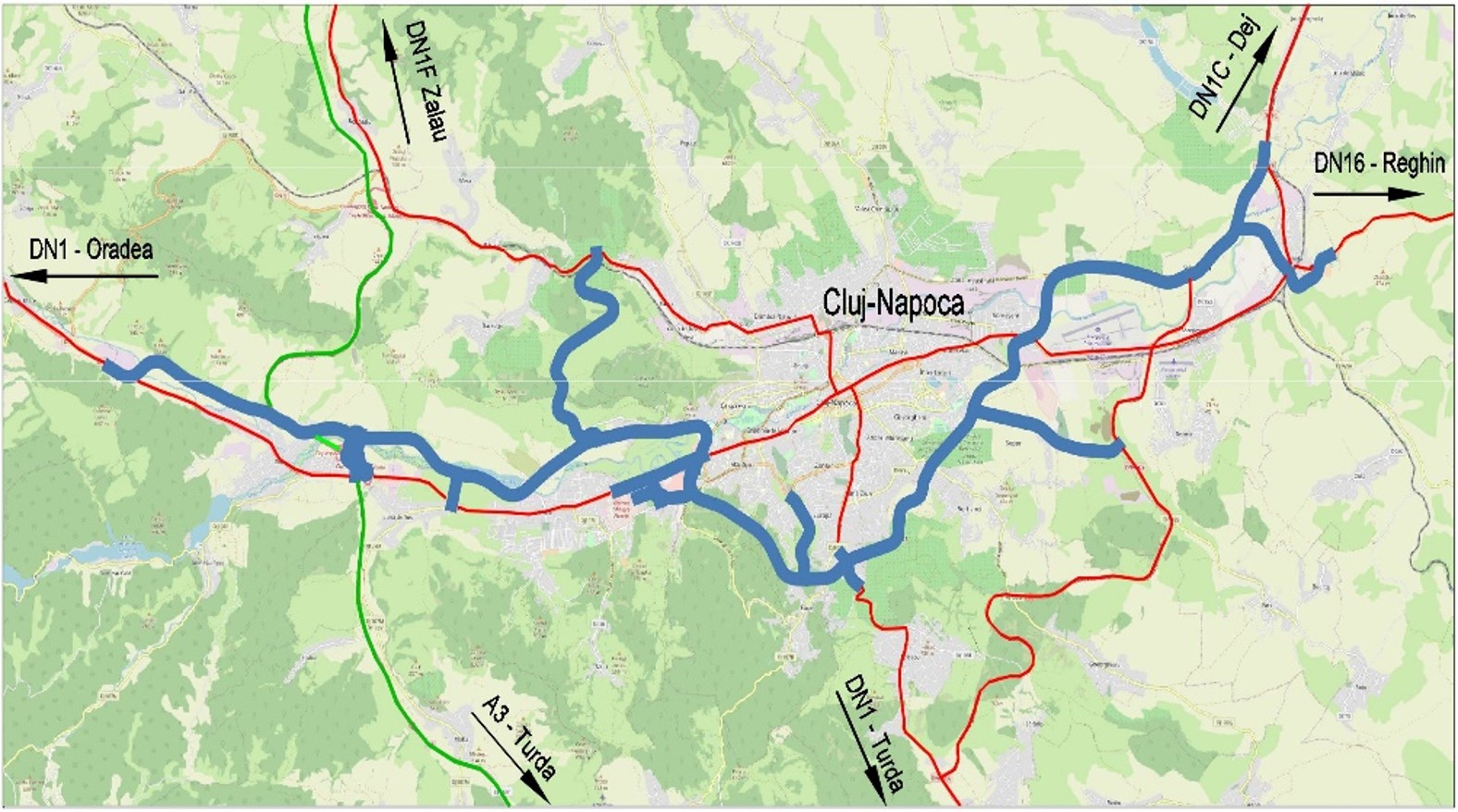
The project, valued at €1.4bln will see work being carried out to construct the metropolitan belt, which will have a length of 42 km, 32 connecting roads, 26 km of belts and junctions and 35 km of bicycle paths.
The work will be carried out in 2 stages, with the first stage aimed at connecting the area which will house the Florești Regional Emergency Hospital, close to the current Water Museum area, and will connect with the existing Vâlcele-Apahida belt.
Cluj-Napoca Mayor, Emil Boc announced the decision on Facebook, and has been actively trying to get approval for this project for many years. In 2017, he was quoted by MonitorulCj, saying, “We have received the support of all the mayors involved in this project. I am confident that the metropolitan belt is entering a different path, with a real chance of achieving it by 2023.” However, clearly this hasn't been the case.
Plagued with bureaucracy, followed by seats in governments changing hands, a pandemic and a increased cost of construction, people were beginning to lose hope that this project would ever start.
Residents of Cluj-Napoca and the surrounding areas will hopefully soon be able to start to see the work starting to take shape, and the project progressing.