Recent air quality readings have drawn attention to the condition of the air in Cluj-Napoca, particularly during the winter period. Monitoring platforms indicate that levels of fine particulate matter, known as PM2.5, have at times been significantly higher than the limits recommended for long-term health.
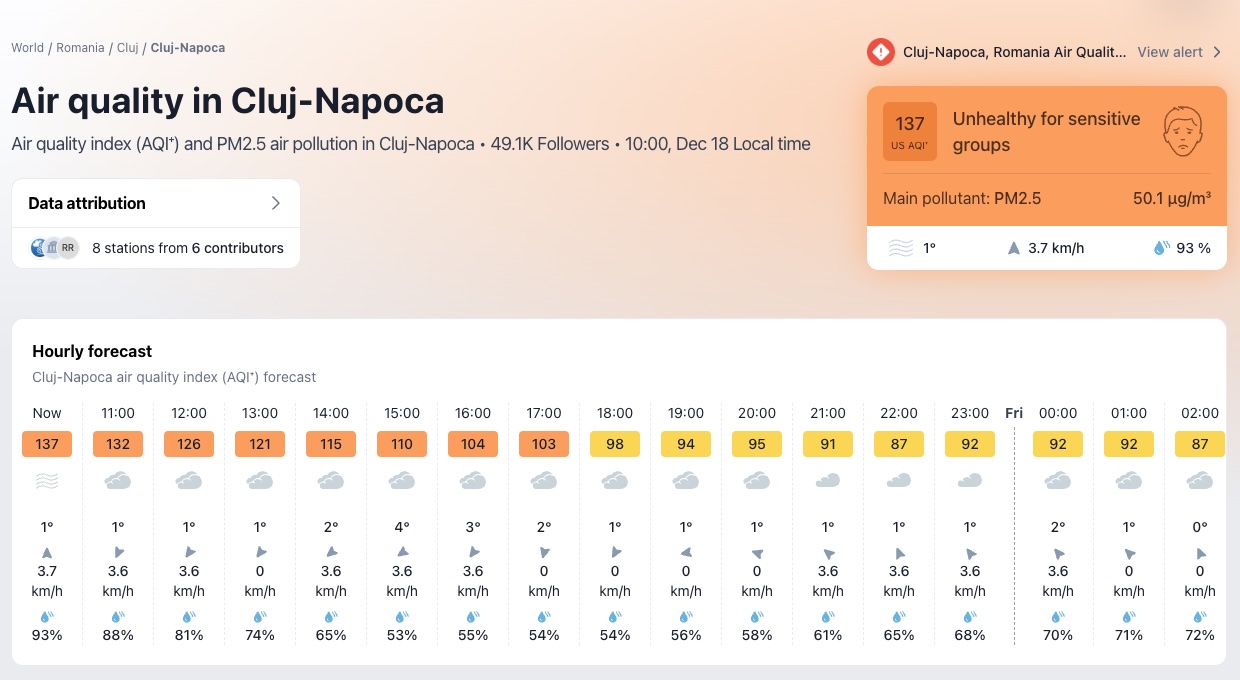
PM2.5 consists of microscopic particles produced by fuel combustion, traffic emissions, and heating systems. Because these particles are so small, they can penetrate deep into the lungs and enter the bloodstream, increasing the risk of respiratory and cardiovascular problems. The World Health Organization recommends an annual average PM2.5 limit of 5 micrograms per cubic metre, a threshold designed to reduce long-term health risks.
During recent winter days, real-time measurements in Cluj-Napoca have shown concentrations many times higher than this guideline. While short-term spikes do not automatically mean that the city’s annual average will reach the same level, repeated episodes increase cumulative exposure for residents, particularly during colder months.
Alongside monitoring data, many residents have reported that the air feels heavier than usual, with irritation to the throat and eyes during outdoor activity. While personal perception is not a substitute for measurement, it often aligns with periods of elevated particulate levels, particularly when pollution lingers for several hours or days.
Health specialists generally advise limiting prolonged outdoor exertion during such periods, especially for children, older adults, and people with asthma, heart disease, or other respiratory conditions.
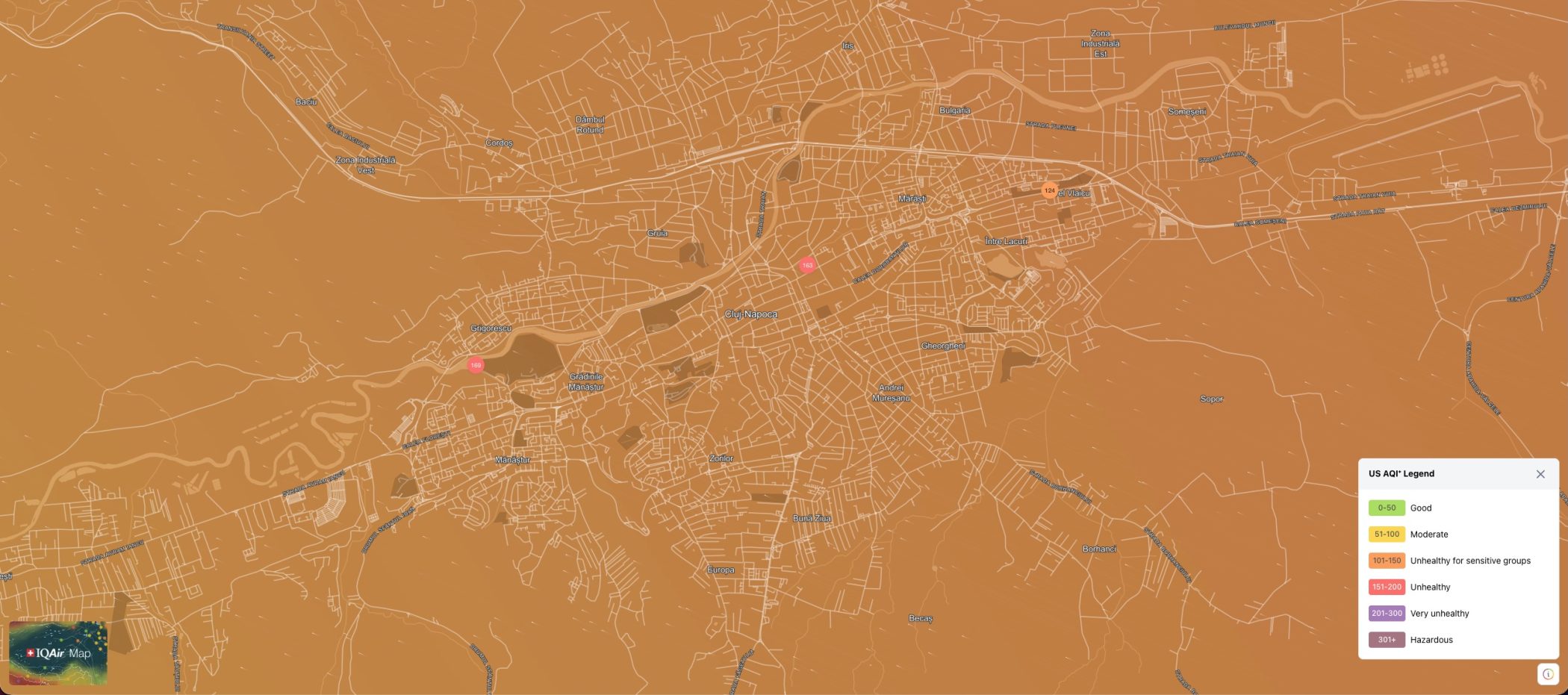
Traffic and urban emissions
Traffic emissions are a known contributor to urban air pollution, particularly in dense areas with slow-moving vehicles. In recent years, Cluj has seen an increase in mopeds and motorcycles, as well as cars that have been mechanically modified to produce louder exhaust noise and this is in addition to the fact that the city basically becomes gridlocked every day during rush hours with people who prefer to use their cars, rather than public transport.
As for modified cars, Clujeans have noticed a significant increase in the amount of vehicles that have been modified to be louder or create backfires. Modifications can involve the removal or disabling of exhaust filtering systems such as catalytic converters or diesel particulate filters. These systems are designed to reduce both noise and harmful emissions. When they are altered or removed, particulate and gaseous emissions can increase at street level.
Residential heating and weather conditions remain the dominant factors. However, during periods of low wind and cold air, additional emissions from traffic can contribute to localised pollution, particularly along busy roads and in residential areas.
Public transport and efforts to reduce car traffic
Cluj-Napoca’s local authorities have repeatedly stated that reducing car traffic is a key part of improving air quality and easing congestion. Public transport plays a central role in this strategy, with ongoing investment in bus lanes, fleet upgrades, and measures aimed at making buses a more attractive alternative to private cars.
The city operates an extensive bus and trolleybus network, and recent years have seen the introduction of newer vehicles, including electric and hybrid buses, intended to lower emissions per passenger compared to individual car use. Dedicated bus lanes on major routes are also designed to improve journey times and reliability, particularly during peak hours.
Encouraging public transport use is widely recognised as one of the most effective ways to reduce traffic-related pollution, especially in dense urban areas. Fewer cars on the road can mean lower overall emissions, reduced congestion, and improved air quality at street level.
However, capacity remains a challenge. During rush hours, many buses are extremely crowded, which discourages some residents from switching away from private vehicles. Overcrowding can make public transport uncomfortable, less predictable, and difficult to use for those with mobility issues, children, or tight schedules.
This tension highlights a practical reality. While public transport is a key solution for reducing traffic emissions, its effectiveness depends not only on availability, but also on comfort, frequency, and reliability. Without sufficient capacity to meet peak demand, efforts to shift people out of cars may struggle to achieve their full potential.
Improving air quality through transport policy therefore requires not just encouraging public transport use, but ensuring that the system can absorb increased demand in a way that remains practical for daily commuters.