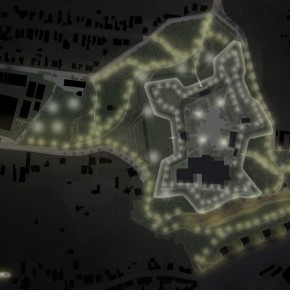
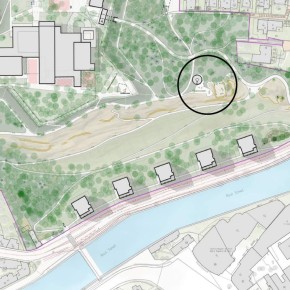
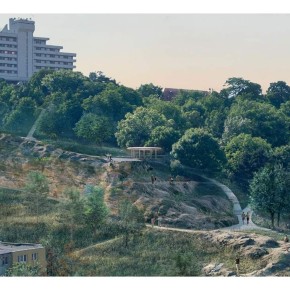
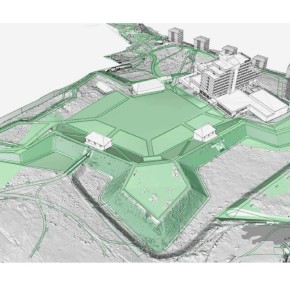
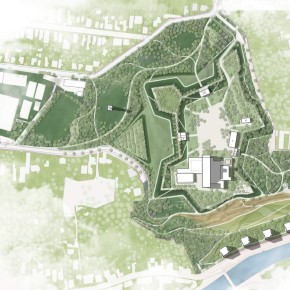
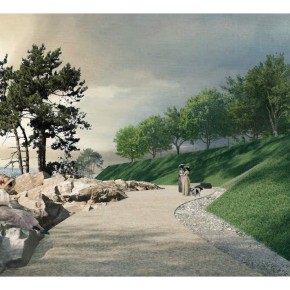
Cluj-Napoca Mayor, Emil Boc has presented a concept of how the Cetățuii (Fotress hill, where Belvedere hotel is located), would look, following a contest in partnership with O.A.R (Ordinul Arhitecților din România / Order of Architects in Romania).
The location is frequented by tourists and citizens throughout the entire year, offering stunning views across the city. However, due to the heavy foot traffic, the pathways and landscaping have become both damaged and dated. This project is aimed at bringing the site back to life and the specialists emphasised on keeping the area's natural framework and carrying out punctual and minimal interventions.
The plans show new walkways, fitted with urban furniture and spaces for relaxation, as well as renovation of some of the old and historic structures.
Interestingly, the parachute tower will also be integrated into the project, and could become a landmark for the area.
Included in the plans, are children's play areas, sport activities, as well as spaces for cultural activities, terraces and places to eat, in addition to a new intelligent lighting system, information panels and USB charging stations.