Cluj-Napoca Central Park (Parcul Central „Simion Bărnuțiu”)
The Cluj-Napoca Central Park, or Parcul Central „Simion Bărnuțiu”, is one of Cluj's most enticing locations. With almost 200 years of history, it is one of the main green spaces in Cluj-Napoca.
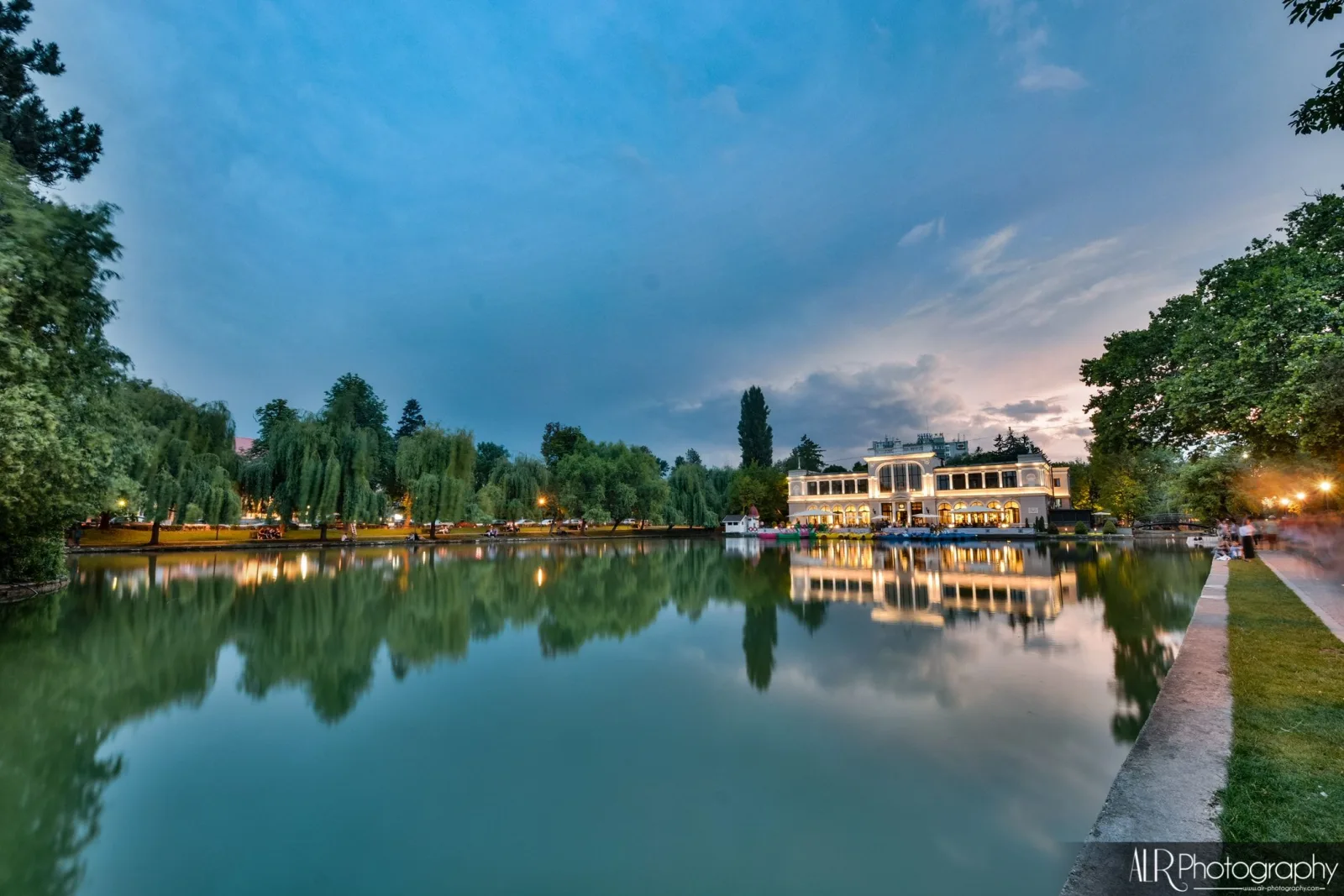
The Cluj-Napoca Central Park, or Parcul Central „Simion Bărnuțiu”, is one of Cluj’s most enticing locations. With almost 200 years of history, it is one of the main green spaces in Cluj-Napoca.
HISTORY OF THE PARK
The history of this park dates back to 1827, when the Women’s Charity Organisation rented the grove with the intention to create a place within the city which would be suitable for longer walks. The land at the time was a swampy area, which required work carried out by the municipality in order to convert the space which was frequently flooded by the river.
By 1833, plans were already underway to start the development of the park and on 22nd April 1838, the park was officially founded and work continued on the park over the course of many decades. Rubble from the demolished medieval city walls was used to drain the whole area, and holes were dug and filled with organic material from areas which today are Piața Mihai Viteazul, Piața Avram Iancu and Piața Ștefan cel Mare.
The project of developing the lake was taken over by the architect Anton Kagerbauer, and work started in 1871. The park received a development boost following the 1896 Hungarian millennium celebrations, when designs were created for a skating pavilion, the kiosk, the fountain and the brass band pavilion, all of which were designed by Lajos Pákei, a famous architect from Cluj.

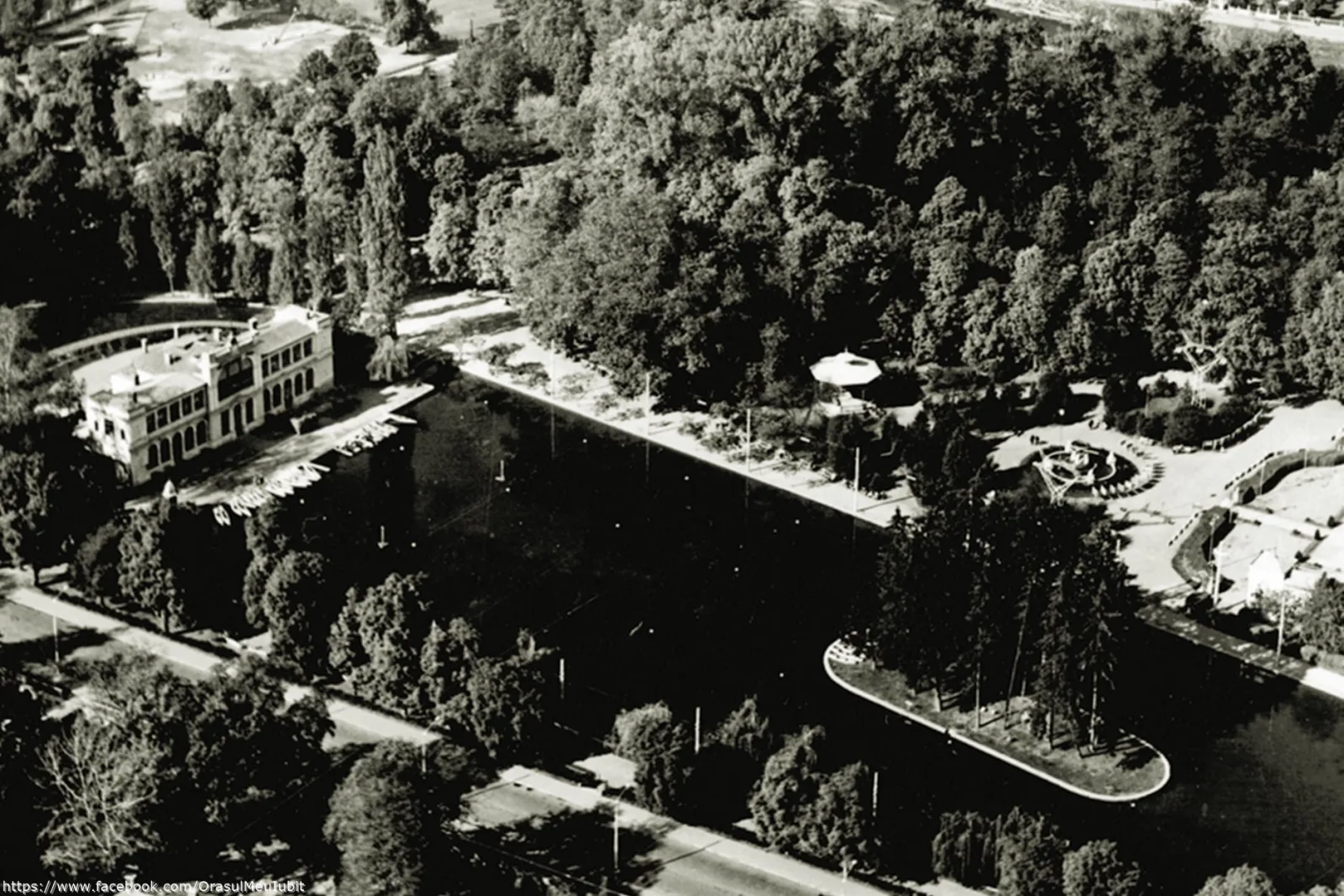
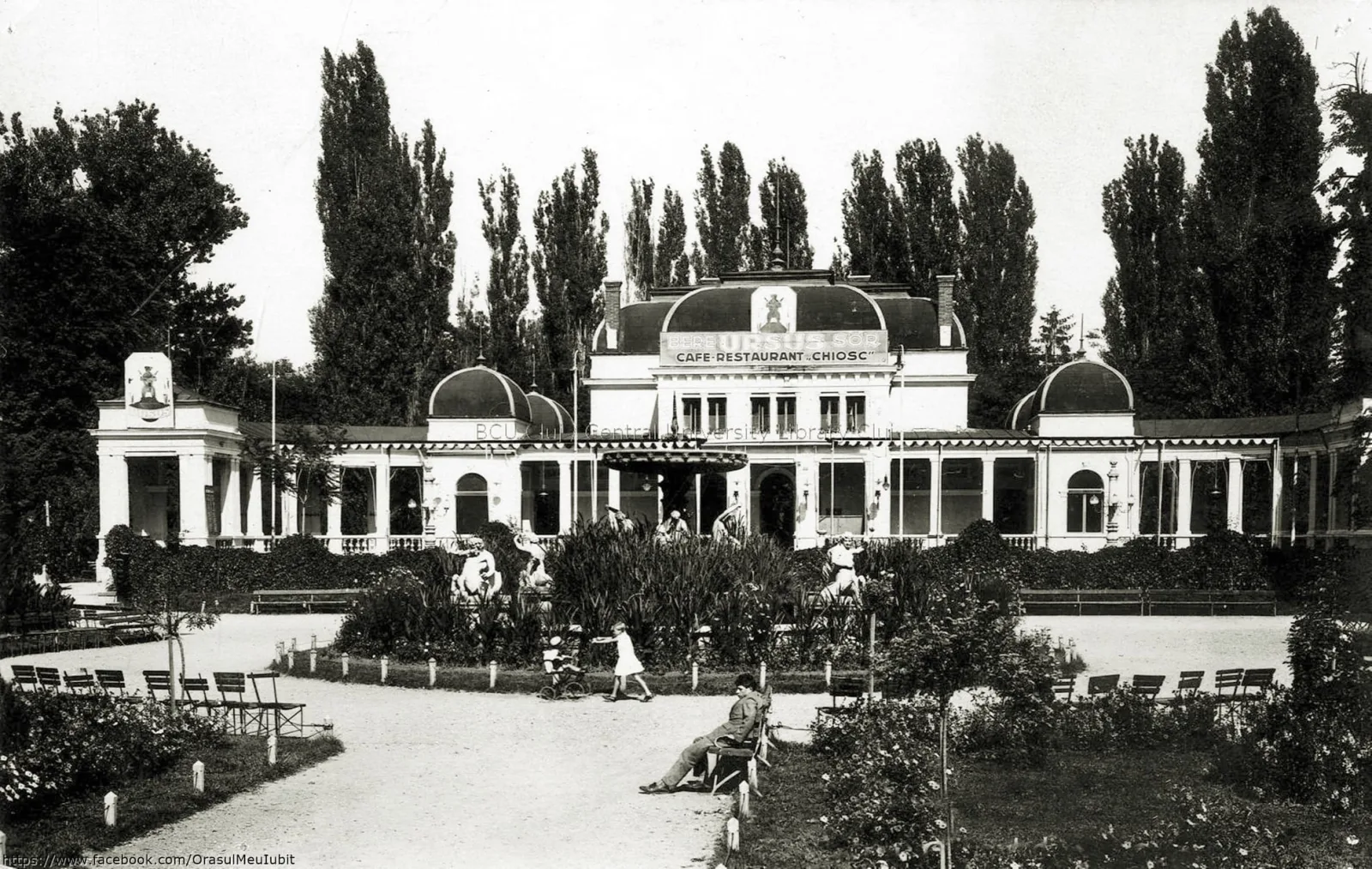
1827 - reference moment - The Women's Welfare Association rents the undeveloped land, wanting to create a recreational place.
1830 - Opening of the park to the public, originally named Népkert (People's Park).
1860 - The care of the park is taken over by the Park Commission, its president being Count Imre Mikó.
1862 - Establishment of the Choir of Young Merchants from Cluj, which, under the opera conductor Bela Stoger, used to sing in the evening on the lake shore.
1865 - The care of the park is taken over by the Park Association which organised the alleys, dug the lake and built the music pavilion.
1871 - The lake is rented by the Skating Association.
1874 - Built according to the plans of the architect Henrik Zimmermann, the Summer Theatre was opened, today the headquarters of the Hungarian State Theatre.
1877 - The Skating Association builds a wooden pavilion on the middle island.
1896 - 1897 - The skating pavilion and the kiosk were built, both designed by the Cluj architect Lajos Pákei.
1900 - In the new building next to the park, designed by the architect Ignác Alpár, the De Gerando High School for Girls begins to function.
Today the building houses the Faculty of Chemistry of Babeș-Bolyai University.
1960 - Starting with this year, in the park there will be the statues of some famous personalities: Antonin Ciolan, George Coșbuc, Liviu Rebreanu, Octavian Goga, Sigismund Toduță.
1989 - After this year, the park is given the name of Central Park "Simion Bărnuțiu".
2010 - Registration of the park on the list of historical monuments in Cluj County, developed by the Romanian Ministry of Culture and National Heritage.
2011 - During the mandate of Mayor Sorin Apostu, the alleys were concreted and several century-old trees were cut down, which provoked dissatisfaction and protests from several Cluj residents.
20TH CENTURY
During the 20th century, the park benefitted from many modernisations and changes, including lighting along the main alley and the expansion of the lake, which resulted in the skating pavilion ending up as an island in the middle of the lake.
In 1940, famous architect Károly Kós designed a building which was intended to house exhibitions from Transylvanian artists. The building now hosts painting workshops by the Art & Design University.
Statues were also built around the park after 1960:
- Antonin Ciolan (Conductor)
- George Coșbuc (Poet)
- Liviu Rebreanu (Novelist)
- Octavian Goga (Poet)
- Sigismund Toduță (Composer)
A statue of the composer Nicolae Bretan was added more recently.
Unfortunately, the park did suffer some neglect, with the famous Casino building falling into a severe state of disrepair until 2012, when the building was restored and new groundwork was carried out to make it one of the most recognisable centrepieces of the park today.


On May 25th 2012, the Casino building was re-opened to the public after extensive renovations, costing a total of 40,054,575.96 lei (€9,506,248). Today it is the Casino Urban Culture Centre (Centrul de Cultură Urbană Casino), which hosts exhibitions, concerts and other events.

The park is officially declared as a historic monument in Cluj as it was one of the first gardens in Eastern Europe that were intended to be used by the larger public, and is still considered to be one of the most important leisure spots in the city.
THE PARK TODAY
The park hosts a number of major annual events, such as Untold Festival, the Festival of Light and the Jazz in the Park Competition (the main Jazz in the Park festival now takes place in the Romulus Vuia Ethnographic Park). In winter, the lake often freezes over, converting it into an ice skating rink.

The lake is also home to some swans and ducks, which can be seen during warmer seasons, and you can pedal around the lake in various fun, animal-shaped boats.
There are many other forms of wildlife which can be seen rummaging through the leaves and high up in the trees, especially during autumn when squirrels and other animals are foraging for food.
The park is bordered by the Hungarian Theatre and Opera building and, on the opposite side, by Cluj Arena.