Earthquakes in Cluj-Napoca: how to prepare and what to do
Cluj is in one of Romania’s quieter earthquake areas, but strong earthquakes in Vrancea are felt across the country. What to have ready, what to do when the ground shakes, and where to find reliable information.
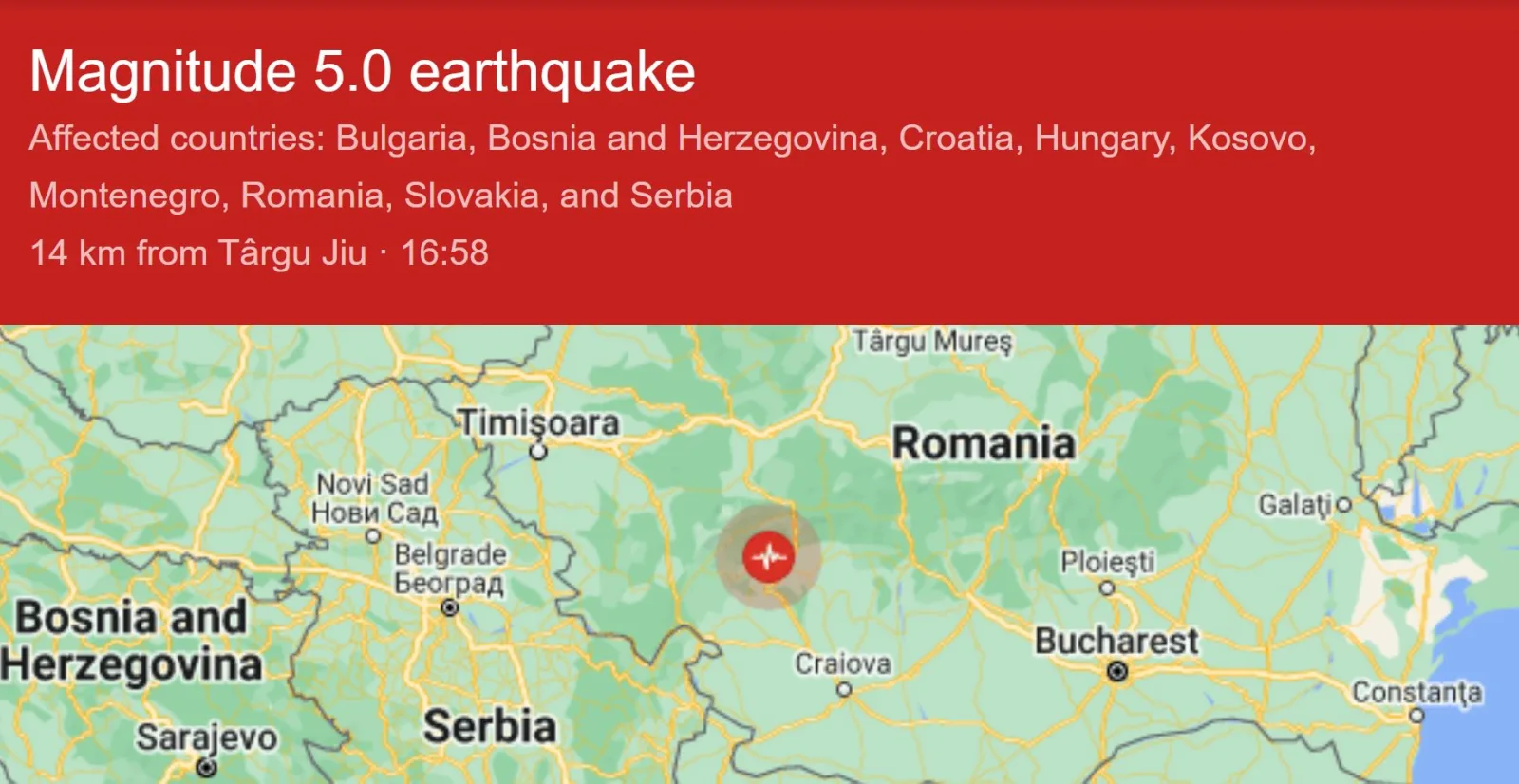
Romania has more earthquakes than most of Europe, and most of the strong ones come from one place: the Vrancea zone at the bend of the Carpathians, about 300 km south-east of Cluj. Cluj-Napoca itself is in one of the country’s lower-risk areas, but a large Vrancea earthquake is felt here – in 1977, a magnitude 7.4 earthquake there killed around 1,500 people, most of them in Bucharest. The most recent one strong enough to notice in Cluj was the 5.7 on 18 November 2026.
A few minutes of preparation make a real difference. This is what the emergency services advise.
Before: get ready at home
- Fix heavy furniture to the wall – wardrobes, bookcases, tall shelves – and keep heavy things on low shelves. Don’t hang heavy pictures or mirrors over beds and sofas.
- Find the safe places in each room: under a sturdy table or desk, or against an inside wall away from windows, glass and things that can fall.
- Know how to turn off the gas, electricity and water in your flat or house.
- Keep an emergency bag where you can grab it: water (a few litres per person), food that keeps, a torch and spare batteries, a power bank, a basic first-aid kit and any medicines you need, copies of your passport or ID and residence permit, some cash, warm clothes and sturdy shoes.
- Agree a plan with your family or flatmates: where you will meet if you are separated, and one person outside the city everyone can contact.
- Renting in an older block? Ask the landlord or the owners’ association whether the building has had a seismic assessment.
During: drop, cover, hold on
- If you are inside, stay inside. Drop to your hands and knees, take cover under a sturdy table or against an inside wall, protect your head and neck, and hold on until the shaking stops.
- Stay away from windows, glass, outside walls, and anything that can fall.
- Don’t run for the stairs or the lift, and don’t go out on to the balcony. Most injuries happen when people try to move during the shaking.
- In bed, stay there and cover your head with a pillow.
- Outside, move to an open space away from buildings, trees, street lamps and power lines.
- Driving, stop somewhere clear – not on or under a bridge or overpass – and stay in the car.
After the shaking stops
- Expect aftershocks. Check yourself and others for injuries, then leave the building calmly by the stairs if it is damaged.
- If you smell gas, don’t use lighters, matches or electrical switches. Open the windows, leave, and call Delgaz Grid on 0800 800 928 (free, 24 hours) or 112.
- Call 112 only for real emergencies – injuries, fire, people trapped – so the lines stay free. Send messages rather than calling friends and family.
- Follow official information: RO-ALERT messages, the emergency services (ISU Cluj) and local radio and TV. INFP publishes the earthquake’s details on infp.ro.
- Cracks in walls or a damaged building? Don’t go back in until it has been checked. Report damage to the town hall (Primăria Cluj-Napoca) or, if it is dangerous, to 112.
Alerts on your phone
RO-ALERT is the government’s system for messages to every phone in an area during an emergency – floods, storms, dangerous situations. It doesn’t warn before earthquakes: the authorities say a few seconds’ notice would cause more harm than good. Keep RO-ALERT messages switched on in your phone’s settings.
Android Earthquake Alerts is a separate service from Google that uses phones as sensors and can sound a warning seconds before the shaking. Its first magnitude estimates can be wrong – on 18 November it first said 6.5 for what was a 5.7. You can turn it on or off in your phone’s safety settings.
The Department for Emergency Situations has preparedness advice and its DSU app on fiipregatit.ro. For every emergency number in Cluj, see our guide to emergency services.
Sources: Department for Emergency Situations – Fii pregătit; National Institute for Earth Physics (INFP); Mediafax (IGSU on RO-ALERT and phone alerts, 18 Nov 2026); Delgaz Grid (gas emergencies).