Romania's Election Crisis: Aftershocks of the First Round Shake Politics, Economy, and Foreign Relations
Romania teeters after a shock election result: leadership void, currency drop, and rising tension mark a nation divided ahead of a decisive runoff vote.

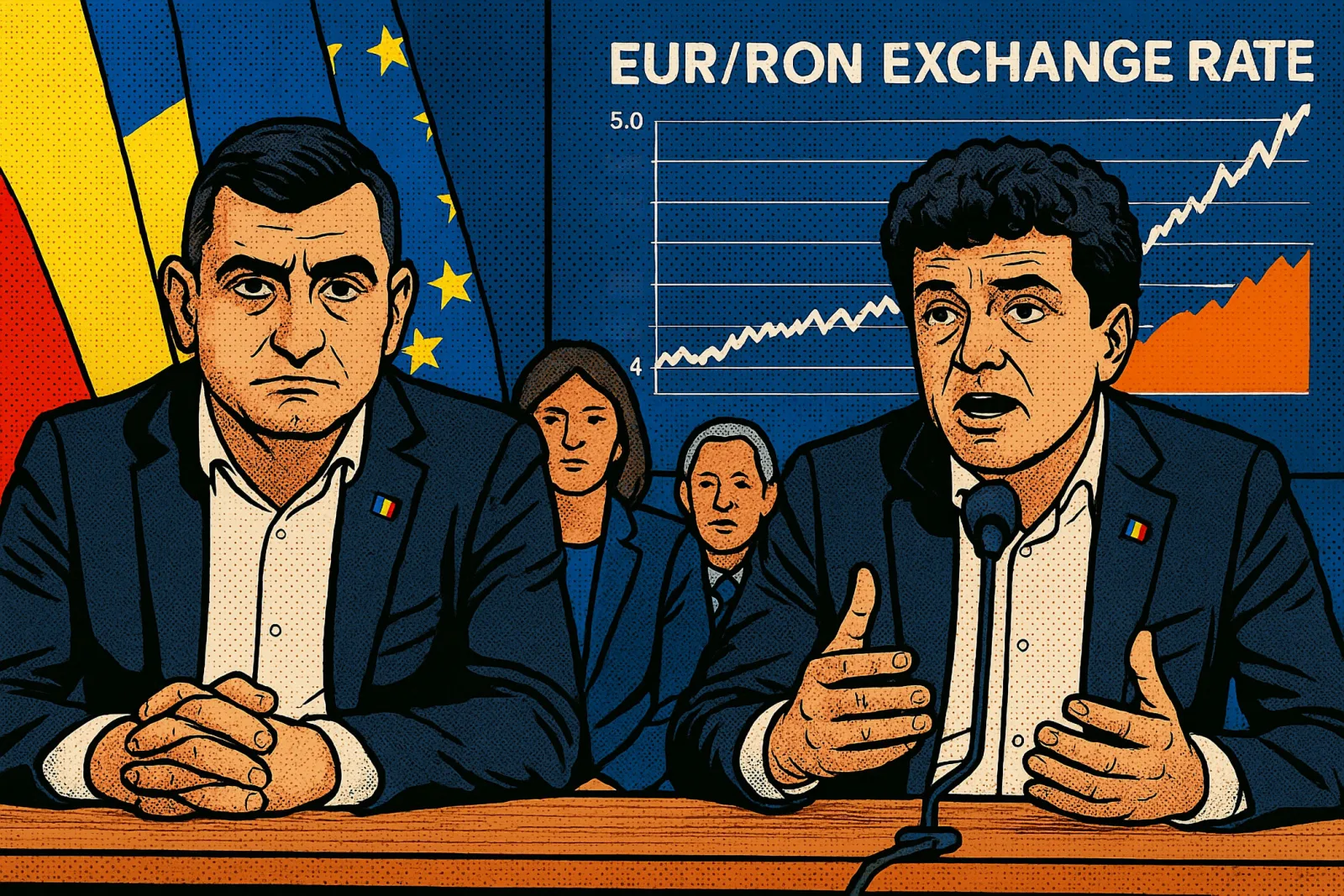
Since the dramatic first round of Romania’s 2025 presidential elections, the country has plunged into political turbulence, with economic uncertainty and geopolitical anxiety following closely behind.
Tensions are up, rent is up, blood pressure is up and reality just hit. Let's bring you up to speed


In a surprise electoral outcome, George Simion, the leader of the far-right nationalist Alliance for the Union of Romanians (AUR), secured 41% of the vote in the first round. He outpaced Bucharest Mayor and independent candidate Nicușor Dan, who managed only 21%. The final runoff between the two is scheduled for 18 May 2025.
The political shock led to the immediate resignation of Prime Minister Marcel Ciolacu and the implosion of Romania’s governing coalition, which had championed a pro-European agenda. The resulting vacuum has created a sense of drift and instability.
What’s at Stake?
The outcome of this election will determine more than just the next president—it will reshape Romania’s political direction, economic strategy, and international standing. A Simion presidency could mean a sharp pivot toward nationalism, Euroscepticism, and isolationism. A victory for Dan, on the other hand, would likely stabilise Romania’s western alliances and preserve its commitments to EU and NATO cooperation.
Simion has pledged a radical restructuring of the state. His most headline-grabbing policy is a promise to eliminate 500,000 public administration jobs over five years, excluding essential services such as healthcare, education, and defence. He also vowed not to raise taxes despite Romania’s growing budget deficit. Crucially, Simion announced that he would nominate Călin Georgescu—the very person over whom the initial elections were annulled citing Russian interference—as prime minister. Georgescu is probably one of the most controversial figures in Romanian politics right now due to his past affiliations with nationalist and anti-globalist causes.
Nicușor Dan offers a more moderate path. His platform centres on fiscal responsibility: reducing wasteful state spending, reforming inefficient state-owned enterprises, and clamping down on tax evasion. He has doubled down on Romania’s strategic ties with the EU and NATO and warned that Simion’s approach would reverse years of integration and progress.
The Ripple Effect... or Wave, in This Case
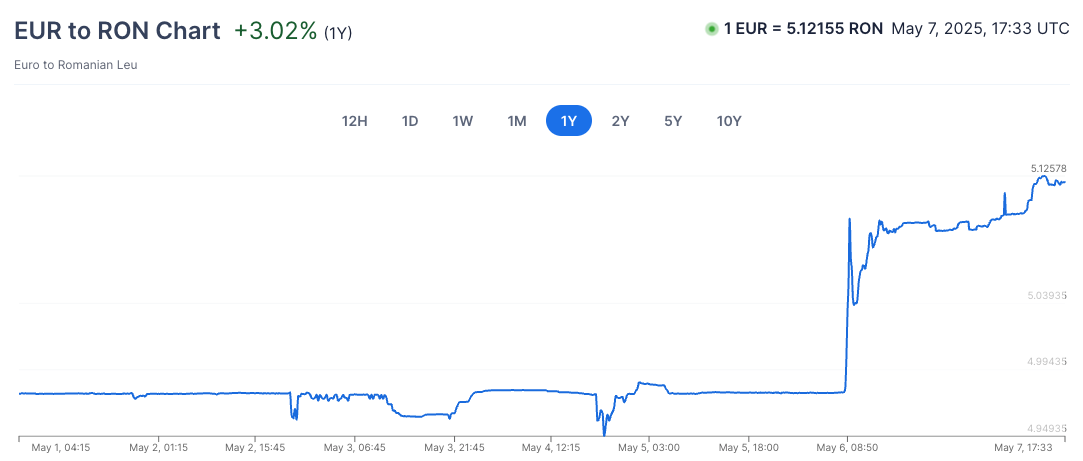
The markets have responded nervously. Following Ciolacu’s resignation, the Romanian leu slipped past the 5 lei per euro threshold—an unwelcome milestone that will have an immediate impact on residents: although Romania’s official currency is the Romanian leu (RON), many services and expenses such as rent are actually charged in Euro and converted to RON.
Bond yields have also risen, while foreign investor confidence has taken a hit. Dan has attempted to calm fears, citing Romania’s solid foreign currency reserves and consistent EU funding, but this will not give much comfort to those whose cost of living is about to skyrocket.
While EU leaders have yet to issue formal statements, sources in Brussels and key European capitals have reportedly expressed concern about a potential Simion victory. His alignment with far-right movements elsewhere in Europe, and the nomination of Georgescu—who has been associated with pro-Russian views—has raised alarms about Romania drifting from the European consensus.
NATO allies are watching closely as well. While Simion has not openly threatened Romania’s military commitments, his broader posture signals a potential re-evaluation of Romania’s role in regional security, particularly in light of the ongoing war in Ukraine.
The tension between the two candidates was symbolically demonstrated when they appeared together at a trade union event—seated with an empty chair left between them. A recent Verifield poll suggests Simion leads with 54.8%, while Dan stands at 45.2%, with a margin of error of ±3%. Both candidates have agreed to participate in televised debates in the run-up to the runoff.
Risks and Impact
A Simion presidency could see Romania tilt toward authoritarian populism, cut ties with long-standing allies, and upend established fiscal policy. Civil unrest or mass demonstrations cannot be ruled out if post-election disputes erupt. The risk to media freedom, judicial independence, and minority rights has also been flagged by civil society watchdogs.
Alternatively, a Dan presidency may bring continuity—but may struggle to command legislative support amid a fractured parliament and a rising nationalist tide.
With the runoff taking place on 18 May, the stakes have escalated from mere political contest to a referendum on the country’s identity, alliances, and future direction. The next ten days will likely determine Romania’s path for years to come—whether it continues as a committed European democracy or veers into nationalist unpredictability.
Whatever the result, it's going to be a bumpy ride and the country may very well still end up with Georgescu in charge of the government with Simion at the top of the chain. You could easily draw comparisons to the U.S. election results, but I think we'll save that for another discussion.
Short link: clujxyz.com/iluihu
Aaron Roberts
My name is Aaron Roberts and I'm the founder of ClujXYZ.com. I've lived in Cluj-Napoca since 2014 and I must say, I absolutely love this city! I'm also a photographer and share my love of the world through my lens!…
More from Aaron