Opening a bank account in Romania as a foreigner
What you need to open a bank account in Cluj, which banks to look at, why the app may not accept your residence permit, and your right to a basic account.
You will need a Romanian bank account sooner or later: for your salary, rent and bills. Opening one as a foreigner is straightforward if you have a residence document, and slower without one. Expect to go to a branch at least once.
What to bring
- Your passport or national ID card.
- Your residence document with your CNP: an EU registration certificate or a residence permit (see our guide to the CNP and registering your residence). Without one, some banks will still open an account, but expect more questions, and possibly a request for a Romanian tax number (NIF).
- A Romanian phone number. Banks send their security codes by text message, and some won’t use foreign numbers.
- Something showing your address and income, for example your rental contract and your employment contract or a certificate from your employer.
You will also fill in a form about your tax residence (for the international CRS and FATCA rules – US citizens get extra questions) and about where your money comes from. Banks have to ask these questions under anti-money-laundering rules, so it isn’t personal.
Which bank?
Banca Transilvania is based in Cluj-Napoca and is Romania’s largest bank, with branches and cash machines everywhere in the city. BCR, BRD, ING, Raiffeisen, UniCredit and CEC are also well represented. Compare the monthly fees, the cost of card payments abroad, and whether the app and the contract are available in English.
If your employer pays salaries through a particular bank, opening an account there can come with lower fees. Under the 2026 rules on foreign workers (OUG 32/2026), employers of workers from outside the EU must pay salaries into a bank account – see our article on the new rules for foreign residents.
Opening an account online
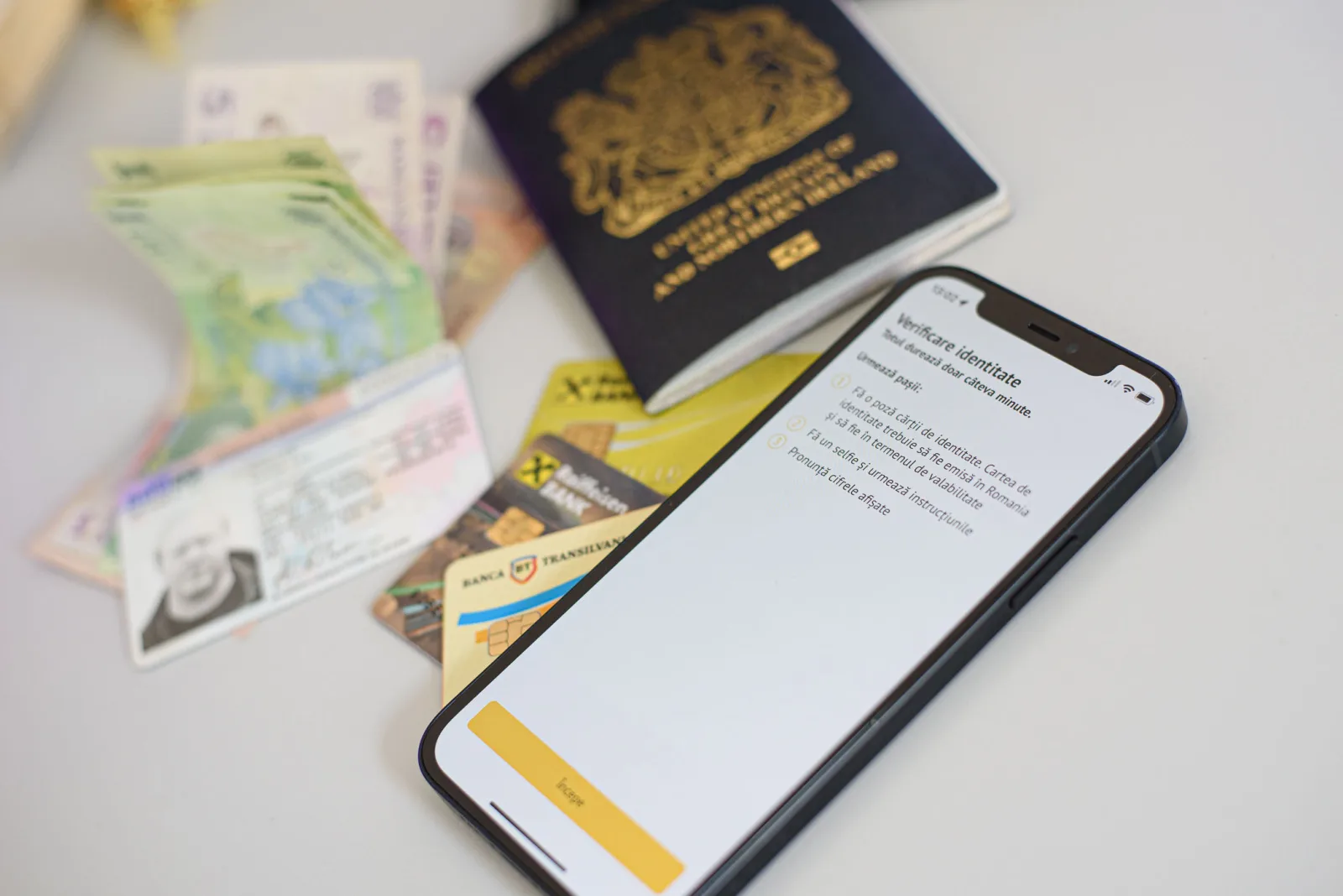
Most Romanian banks let you open an account in their app with a video identification. In practice this often only works with a Romanian ID card. Foreigners have found that the automatic check doesn’t recognise residence permits, as we reported about Banca Transilvania’s app. If the app refuses your documents, go to a branch: staff there can check them in person.
Revolut and other app banks
Revolut has a Romanian branch (Revolut Bank UAB Vilnius Sucursala București) and gives Romanian customers RO IBANs, which Romanian employers and landlords accept like any local account. It is popular with foreigners because the app is in English and opening an account is quick. Some payments, such as certain taxes or bills, may still be easier from a traditional Romanian bank.
Your right to a basic account
Under EU rules, anyone legally resident in the EU has the right to a basic payment account: an account with a card, transfers and direct debits. A bank can refuse only for limited reasons, such as money-laundering concerns, and must tell you why. If a bank turns you down, ask for its reasons in writing and try another bank.
Useful tips
- When a cash machine or card terminal abroad offers to charge you in your home currency, choose to pay in the local currency – the bank’s exchange rate is usually better.
- Change money only at banks or licensed exchange offices (casa de schimb valutar), and compare the rate and the commission first. Never change money with people on the street.
- Card payments work almost everywhere in Cluj, but carry some cash for markets, small shops and taxis.
- Paying a bill or rent by bank transfer within Romania is usually instant.
Checked on 22 November 2026. Rules, fees and office hours change – please confirm with the office concerned before you go, and tell us if something here is out of date.
Sources: Revolut (Romanian IBANs); Your Europe (the right to a basic bank account); Capital.ro (documents banks must ask for).